Boost Rider: Car Racing Games
- 4.5
- Rating
- 1.00M
- Installs
- Free
- Price

 Analysis by App-foxy
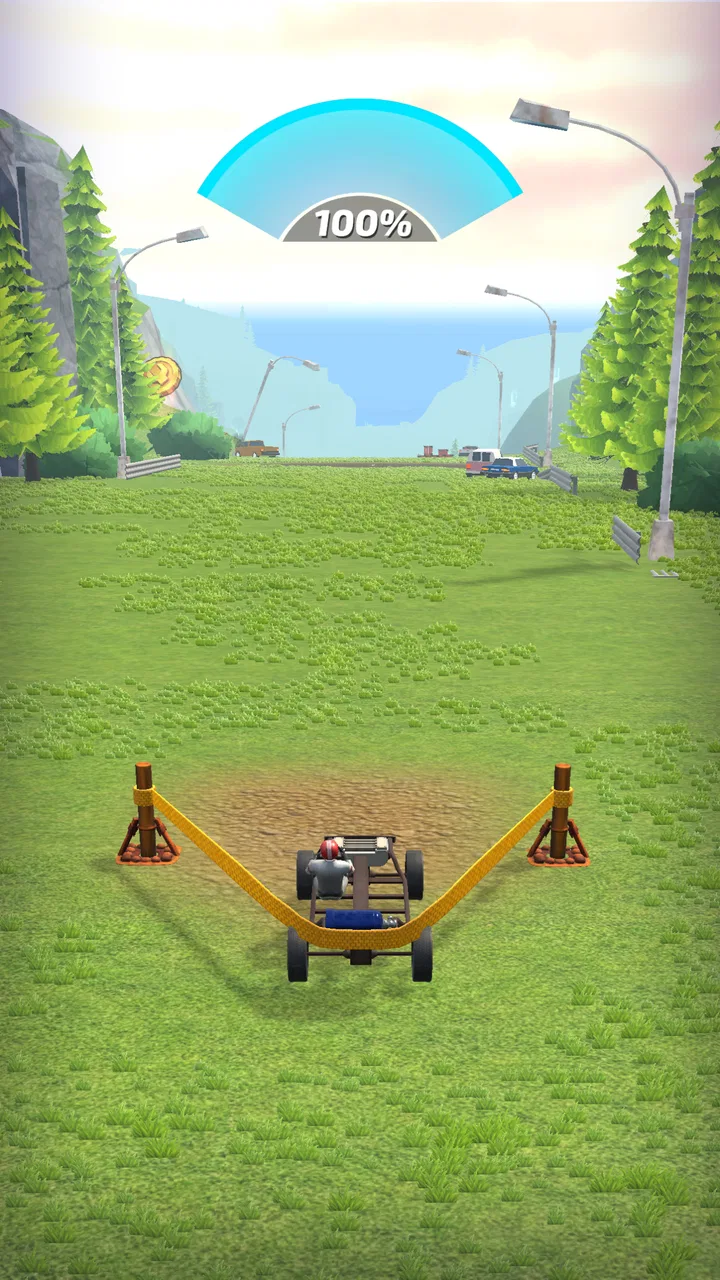
Boost Rider is the kind of racing game I open when I want a quick burst of action rather than a long, complicated driving session. Its central idea is easy to understand: build momentum, use your boost well, and try to travel farther each time. That simplicity makes it approachable, but it also means the game depends heavily on whether its short-form driving loop stays satisfying after the first few sessions.
I spent time looking at it as both a casual game and a lightweight racing option. My overall impression is positive, especially for players who enjoy improving through repeated attempts instead of learning a large vehicle roster or mastering realistic simulation controls. The game is free to download, carries an Everyone age rating, and comes from Kolka Games. It has already attracted over one hundred thousand installs and holds a 4.7 average from around four thousand ratings, which suggests that its straightforward format is connecting with a sizeable audience.
How Boost Rider feels in its current state
The best way to understand this game is to think of it as a distance-focused racing experience. You are not approaching it like a traditional circuit racer with a long practice session, detailed pit strategy, or a collection of licensed cars. The appeal is more immediate: start a run, make useful decisions while moving, and see whether the next attempt can go farther.
You May Also Like

 Blood Strike: 2.5 Anniversary
Blood Strike’s Loadouts Turn Every Drop Into a Tactical Gamble
A close look at Blood Strike’s custom loadouts: how fast access to signature weapons reshapes its battle royale rhythm, rewards preparation, and narrows the gap between fights.

 Pandora - Music & Podcasts
Pandora’s Music Is Easy to Start, but Harder to Recover
Pandora’s strength is its low-effort path from a seed to a station. Its weak spot is how much confidence it asks you to place in connection, setup, and quiet recovery.

 8 Ball Pool
 Is Built on Rivalries, Rematches, and Routine
A close look at the rivalries, rematches, shared routines, and unanswered safety questions that turn a quick pool match into a persistent mobile community.

 Samsung Music
’s Quiet Strength Is Playing What You Already Own
Its reach comes less from spectacle than from dependable access to a personal library. That simplicity is both the app’s strongest retention engine and its ceiling.

 AccuWeather: Weather Radar
AccuWeather Review: A Quick, Clear Forecast for Everyday Decisions
For everyday plans, the best forecast is the one you can understand quickly. AccuWeather makes rain timing, radar, and local conditions easy to act on, with a few trade-offs.

 Hill Climb Racing
Why Hill Climb Racing Still Turns Crashes Into One More Run
A tiny car, a bumpy hill and one more upgrade: Hill Climb Racing keeps resurfacing because its simple chaos makes every near-miss feel personal.
More From Our News Desk
View All News


That structure works particularly well on a phone. I can imagine playing it while waiting for an appointment, during a short break, or at the end of the day when I want something interactive without committing to a full race. The quick-attempt design also makes failure less frustrating than in a longer race. If a run goes badly, the natural response is usually to try again and adjust one decision rather than abandon a ten-minute event.
The controls and objectives are presented in a way that should be comfortable for casual players. You do not need to understand racing terminology to get started, and the store summary, “Build, boost, go far!”, captures the basic rhythm without requiring a tutorial-like explanation. In practice, the important skill is learning when to preserve momentum and when to spend your boost for a stronger push.
That last point is more important than it first appears. A boost is not automatically valuable just because it is available. Using it immediately may produce an exciting opening, but saving it for a moment when your run has better momentum can make the difference between an average attempt and a personal best. I found that treating boost as a decision rather than a button to press on sight gives the game more depth than its compact presentation suggests.
A good fit for short, repeatable sessions
Boost Rider is strongest when you judge it by the quality of its individual attempts. It does not need to replace a full racing game to be worthwhile. Instead, it offers a focused alternative for people who like a simple goal, rapid feedback, and the feeling that one more attempt might improve the result.
A realistic everyday use case would be a commuter playing a few runs before leaving a train or a student taking a short break between tasks. The game’s format suits those moments because the player can engage immediately and stop without needing to remember a complicated championship structure. If you prefer games that respect short sessions, this is one of its clearest strengths.
It is also a reasonable introduction to racing games for someone who finds simulation controls intimidating. There is no need to begin by learning braking points, tuning setups, or track layouts. The focus is narrower, so a new player can concentrate on timing, movement, and the relationship between speed and distance.
Where the racing loop asks for patience
The same simplicity that makes the game accessible may limit its appeal for experienced racing fans. Players who want realistic handling, detailed vehicle customization, multiplayer competition, or a broad career mode may find the experience too focused. Boost Rider is built around its core run, so it should not be approached as a substitute for a full-featured console-style racer.
There is also a natural risk of repetition. When a game revolves around going farther and refining the same basic sequence, its long-term value depends on how rewarding those improvements feel. If you enjoy chasing small gains, repeating a run can be motivating. If you need frequent new tracks, events, or mechanics to stay interested, the compact design may begin to feel narrow.
That is not a flaw in every situation. A focused game can be more enjoyable than an overloaded one when you only have a few minutes. Still, I would recommend setting expectations correctly: this is a casual racing game with a clear central loop, not a deep driving simulator disguised as a small download.
What the current release tells me about its direction
The current version is 1.0.12, while the game’s release date is listed as March 24, 2026. Those details place the product in a relatively early stage of its life, so I see it as a young racing game that is establishing its identity rather than a mature platform with years of accumulated systems.
That matters when deciding whether to install it. Early releases can feel clean because they concentrate on one idea, but they can also leave players wanting more variety as they become familiar with the routine. I would judge this version primarily on whether the basic movement, boost timing, and distance goal feel enjoyable, rather than assuming that it already offers the breadth of a long-running racing franchise.
The version number is useful context, but it should not be treated as proof of a particular feature set. What I can reasonably take from it is that Kolka Games is maintaining a numbered release beyond the initial launch. For a player, the practical lesson is to keep the game updated through the normal store process and to evaluate the experience as it exists now, not on promises about what might arrive later.
For existing users, the most important effect of a current version like this is stability of the core experience. If you already enjoy the short runs, an update path gives you a reason to stay with the installation instead of treating it as a one-time experiment. At the same time, I would avoid assuming that every future update will change the game’s fundamental character. The current identity is built around accessible racing and boosting, and that focused identity is part of its appeal.
How to get more from each attempt
My first practical tip is to stop judging a run only by its final distance. Pay attention to the moment where the attempt begins to lose efficiency. Was the boost used too early? Did you react to a problem instead of preparing for it? Did you spend your strongest opportunity simply because it was available? This kind of review turns a failed run into useful information.
A second tip is to create a small personal routine before restarting. Rather than tapping through another attempt immediately, take a second to choose one adjustment. Change the timing of the boost, alter your early movement, or focus on preserving momentum for longer. Making one deliberate change at a time helps you understand what actually improved the result.
A third insight is that the game may be better played in short blocks than in one extended sitting. Repetition can sharpen timing, but it can also make you press buttons automatically. When that happens, a brief pause is more useful than forcing another attempt. Returning later with a fresh eye can make the same course of action feel more readable.
These are small habits, but they matter in a game whose depth comes from execution rather than from a large menu of systems. The more consciously you treat each attempt, the less the experience feels like random repetition.
Free entry, with purchases to consider
Boost Rider is free to play, which makes trying it low risk. The game includes in-app purchases ranging from $1.99 to $59.99 per item, so I would recommend checking the purchase screen carefully before confirming anything. A free download can be perfectly comfortable for a player who is happy to progress at a relaxed pace, while another player may feel pressure if optional spending is placed prominently in the session flow.
My advice is simple: install it first because the driving loop interests you, not because you expect purchases to transform it into a different game. If the basic run is enjoyable without spending, that is a good sign that the title works on its own terms. If you dislike games that present paid options during casual play, you may prefer a paid racing game with a clearer one-time cost, even if it offers less immediate access.
The Everyone rating also makes the game suitable for a broad audience, but younger players may still need guidance around purchases. The age rating describes the content, not how a household wants to handle spending. I would enable the device’s purchase protections before handing the game to a child.
Who should choose it and who should skip it
I would recommend Boost Rider to someone who likes arcade-style racing, short attempts, and gradual improvement. It is especially appealing if you want a game that can be understood quickly but still rewards better timing. Casual players who do not want to study vehicle statistics or memorize complex tracks should feel comfortable here.
It is also a good choice for players who enjoy a personal challenge more than direct competition. The satisfaction comes from making a cleaner run and pushing the distance farther, not necessarily from defeating a large field of opponents. That makes it a calmer alternative to racing games built around aggressive online competition.
I would be more cautious about recommending it to a dedicated racing enthusiast who expects simulation physics, extensive tuning, realistic motorsport presentation, or a deep progression structure. Those players will probably get more from a conventional racing title with a larger selection of cars and events. Similarly, anyone who quickly loses interest when a game repeats its central action should try a short session before deciding whether the loop has enough staying power.
Compared with endless-runner games, Boost Rider has a more clearly racing-oriented identity because boost management and distance are central to the experience. Compared with traditional racing games, it is lighter and less demanding. That middle position is useful: it offers more intentional decision-making than simply reacting until a run ends, but it avoids the time commitment of a full race weekend or career campaign.
Questions I would ask before installing
If you are wondering whether it works offline, whether it includes a particular control method, or how extensive its vehicle selection is, I would not make the installation decision based on assumptions. The safest approach is to try the free version and see whether its actual controls and session flow match your preferences. The game’s low entry cost makes that practical, but you should still consider your comfort with optional purchases.
If you are asking whether it is suitable for a child, the Everyone rating makes it broadly accessible from a content perspective. I would still supervise spending and make sure the child understands that paid items are optional. For family use, the simple objective may be easier to explain than the layered systems found in larger racing games.
If you are asking how long it will remain interesting, my answer depends on your relationship with repetition. Players who enjoy refining timing can return often because each attempt offers a small performance target. Players who need constant new content may reach the limits sooner. The game’s early release stage also makes it sensible to watch how Kolka Games develops it rather than assuming the current scope will remain unchanged.
If you are already playing and feel stuck, focus on one variable instead of reacting emotionally to the result. Preserve boost for a more valuable moment, compare two attempts with different timing, and take breaks when your inputs become automatic. That approach is more likely to help than simply restarting at a faster pace.
My final view after looking at the whole package
Boost Rider succeeds because it does not make the player work hard to understand the goal. Build momentum, use the boost intelligently, and try to go farther. That clarity gives it a strong place among casual racing games, especially for short mobile sessions.
Its limitations are equally clear. The focused design may not satisfy players searching for simulation depth, a huge content library, or elaborate competitive features. The in-app purchase range also means families and cautious spenders should pay attention to the purchase flow. Those are not reasons to dismiss it, but they are important when matching the game to the right player.
In my experience, the best way to approach it is as a compact skill game rather than a complete racing universe. Give it a few focused sessions, learn how your boost timing affects each attempt, and decide whether improving distance feels rewarding. If that loop clicks, the free entry and accessible presentation make it easy to keep around for spare moments.
My recommendation is to try it if you want quick, repeatable racing with a simple goal and room to improve. I would skip it only if your priority is realism, extensive customization, or constant variety. As Kolka Games continues developing this early release, I will be watching whether the game preserves its clean simplicity while giving regular players more reasons to return. For now, Boost Rider is a promising lightweight racer whose value comes from making one more attempt feel worthwhile.
FAQs for Boost Rider: Car Racing Games
01What is Boost Rider about?
Boost Rider is an exhilarating racing game that combines high-speed action with strategic gameplay. Players navigate through challenging tracks filled with obstacles, earning boosts to enhance their vehicles and performance. With stunning graphics and immersive sound effects, it offers a thrilling experience for both casual gamers and racing enthusiasts.
02Is Boost Rider free to play?
Boost Rider is free to download and play, but it includes in-app purchases. These purchases offer players options for customization and additional boosts to improve gameplay. While the core game is enjoyable without spending, some players may prefer buying items to enhance their experience and progress faster.
03What are the system requirements for Boost Rider?
Boost Rider requires Android 5.0 or iOS 11.0 and above. It’s optimized for both smartphones and tablets, providing smooth gameplay and stunning graphics. Ensure your device has adequate storage space and a stable internet connection for optimal performance and access to all features, including multiplayer modes.
04Does Boost Rider have a multiplayer mode?
Yes, Boost Rider features an exciting multiplayer mode where players can compete against friends or other online racers. This mode adds a competitive edge, allowing players to showcase their skills and climb the leaderboards. It’s a great way to engage with the community and test your racing prowess.
05How often does Boost Rider receive updates?
The developers of Boost Rider regularly update the game to introduce new features, tracks, and vehicles. Updates also focus on bug fixes and performance improvements to enhance the overall user experience. Players can expect fresh content periodically, keeping the game exciting and engaging.
Pros
- Engaging graphics and smooth gameplay.
- Wide variety of vehicles to unlock.
- Challenging levels keep it exciting.
- Frequent updates with new content.
- Easy to learn controls for all ages.
Cons
- In-app purchases can be expensive.
- Occasional ads disrupt gameplay.
- Requires internet for some features.
- Limited offline play options.
- Battery drain on extended use.

Boost Rider: Car Racing Games
Gallery